

LGM Studio . Fotografia de Arquitectura

LGM Studio . Fotografia de Arquitectura

LGM Studio . Fotografia de Arquitectura

LGM Studio . Fotografia de Arquitectura

LGM Studio . Fotografia de Arquitectura
LGM Studio . Fotografia de Arquitectura

LGM Studio . Fotografia de Arquitectura

LGM Studio . Fotografia de Arquitectura

LGM Studio . Fotografia de Arquitectura

LGM Studio . Fotografia de Arquitectura

LGM Studio . Fotografia de Arquitectura
LGM Studio . Fotografia de Arquitectura

LGM Studio . Fotografia de Arquitectura

LGM Studio . Fotografia de Arquitectura

LGM Studio . Fotografia de Arquitectura

LGM Studio . Fotografia de Arquitectura

LGM Studio . Fotografia de Arquitectura

LGM Studio . Fotografia de Arquitectura

LGM Studio . Fotografia de Arquitectura

LGM Studio . Fotografia de Arquitectura
Project: Estudio Atemporal
Location: Colima 124, Colonia Roma, CDMX, México
Area: 224 m2
Year: 2015
Campobaja comes directly from Ensenada, Baja California. More than a restaurant that simply prepares food in the same way it is done there, it is a small piece of Baja transplanted into the Roma neighborhood.
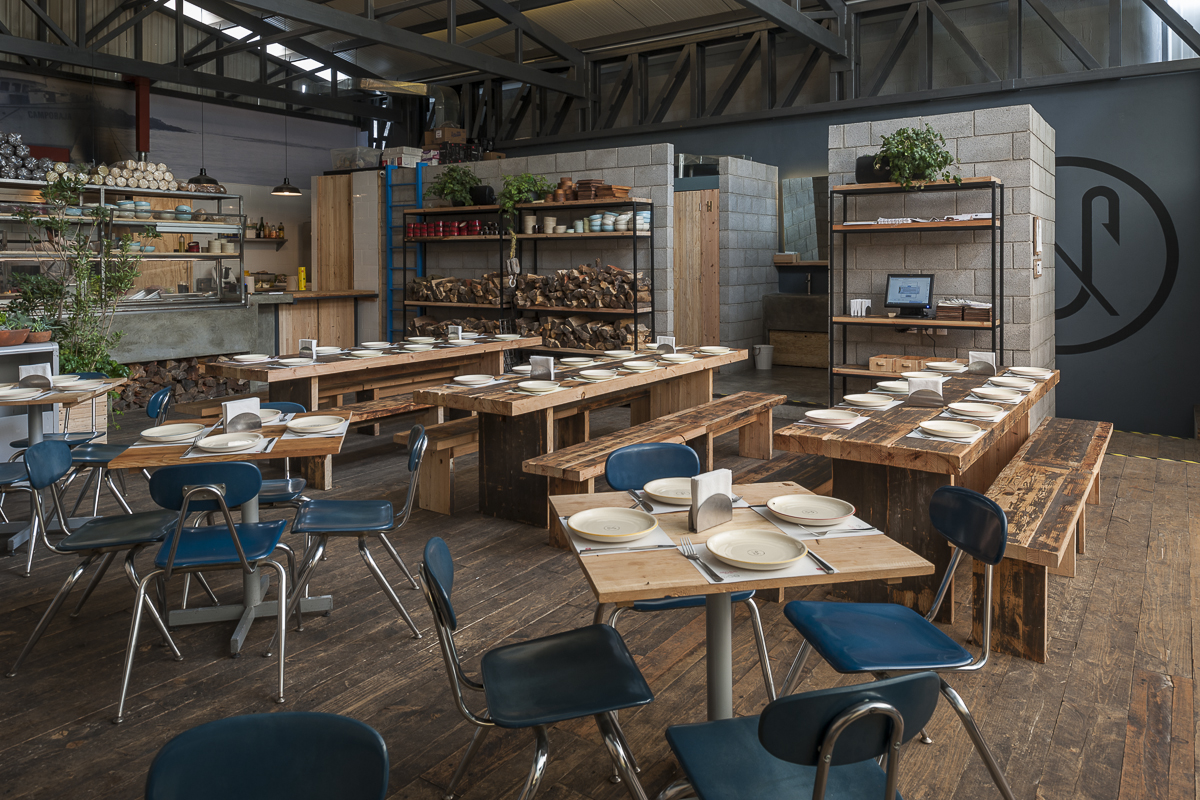
The space is organized over two levels. The first consists of a modest street-level entrance that leads into a vestibule clad in wood and plants, creating an uncertain, anticipatory prelude. The second level is revealed upon ascending the spiral staircase, where an exposed concrete block wall comes into view, shifting the perception of the space. The ceiling height increases dramatically, and the roof structure becomes a dominant architectural element.
Two-thirds of the floor area is located beneath the new structure, where a double-height glazed partition separates the dining room from the terrace. When fully opened, this enclosure unifies both spaces, creating a single, continuous environment.
At the rear lies the kitchen, the heart of the space: an area that, through its display window, allows a close relationship with both the ingredients and the preparation processes.
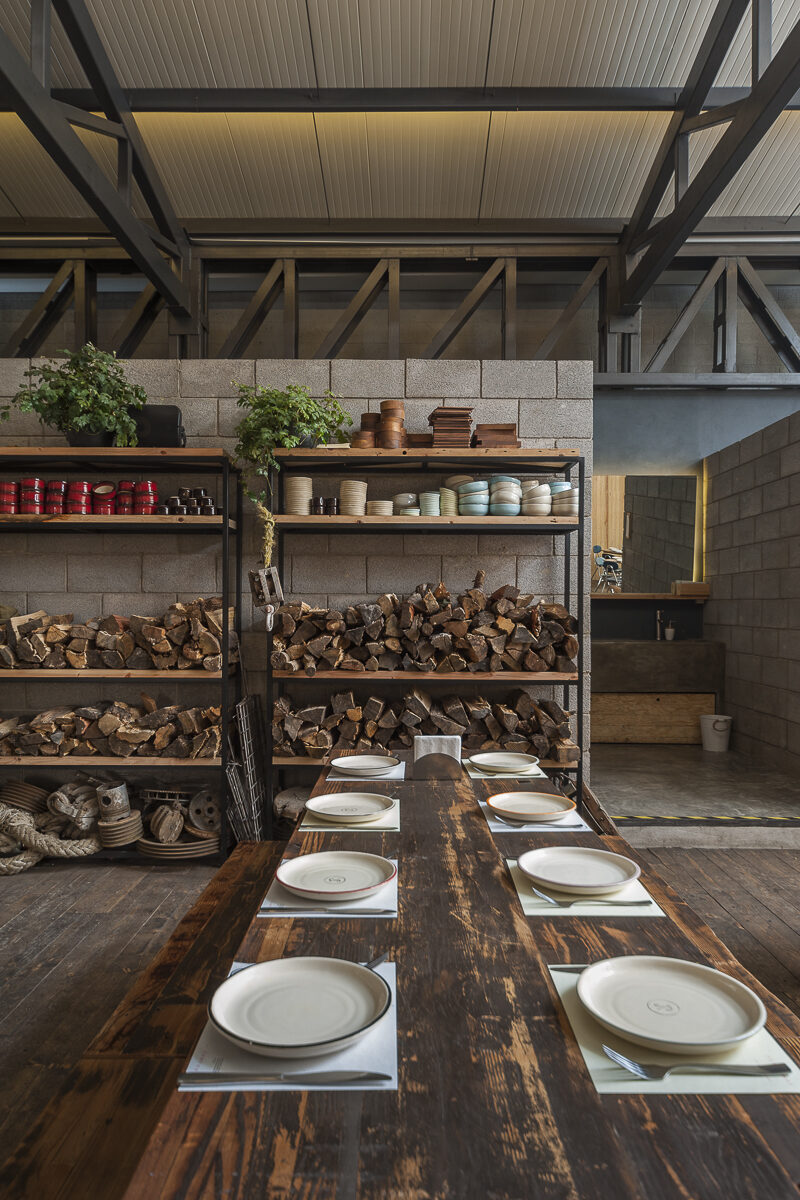
Material reuse was fundamental to the project. In order to capture the essence of the place, a search for materials and furniture was carried out in Ensenada. The flooring, tables, shelves, and stools were made from wooden planks originally used for towing boats; the chairs—adding a touch of color and contrast to the rest of the materials—were salvaged from a classroom in the same region. Likewise, many of the finishes were recovered from the previous tenant and reintroduced through different applications.
